

























Can You Get Pregnant with Low AMH? Ovarian Reserve & Fertility Options
Struggling with low AMH levels? Discover what low ovarian reserve means for your fertility, egg quality vs. quantity, natural conception chances, and proven IVF treatments.

Declining egg count and pregnancy potential: A comprehensive analysis of ovarian reserve, hormone evaluation, and modern reproductive medicine
The main basis of a woman's reproductive capacity and fertility is the amount of eggs stored in the ovaries and their metabolic and genetic capabilities. In medical terminology, this quantitative and qualitative state of reproductive cells is called 'ovarian reserve'. Although the natural decline in the number of eggs with advancing age is a normal physiological process, sometimes the rate of this decline increases abnormally due to various pathological complications, immune system imbalances, or surgery. This condition is medically known as 'Diminished Ovarian Reserve' (DOR). Recent reproductive research shows that while natural conception becomes difficult when the number of eggs decreases, motherhood is entirely possible with proper diagnostic evaluation, timely treatment, and lifestyle changes. ।
The biological timeline of the female reproductive cycle and ovulation
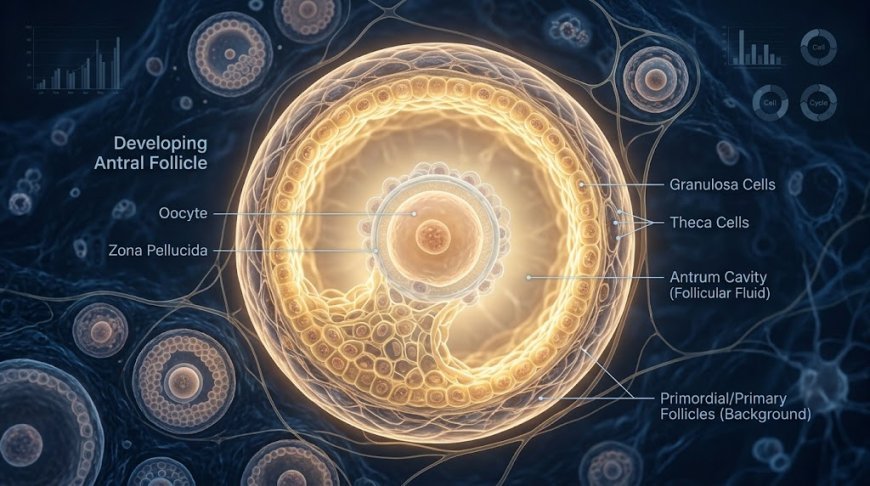
In women, the process of egg production is not continuous throughout life like sperm production in men; rather, the reproductive cells begin in the embryonic stage. Between 20 and 24 weeks of development in the mother's womb, a female fetus develops approximately 6 to 7 million (6 to 7 million) immature eggs in the form of primordial follicles in her ovaries. Later, through a natural process of atresia, this number rapidly decreases to 1 to 2 million at the time of birth. During puberty, before the start of reproductive life, the egg reserve decreases further and becomes limited to 300,000 to 400,000. ।
A woman releases, on average, only 400 to 500 mature eggs through ovulation during her entire reproductive life (from puberty to menopause). Although only one follicle matures and emerges from the ovary each menstrual cycle, approximately 500 to 1,000 immature follicles that participated in early growth in the same cycle are naturally destroyed. Generally, egg reserves begin to decline slowly after the age of 30, and the rate of decline increases dramatically after the age of 35. After reaching the age of 37 to 38, both the number of eggs and the quality of the cells decline rapidly, which eventually leads to menopause. ।
|
Age period |
Average Primordial Follicle/Ovum Number |
Fertility and medical significance |
|
Fetal stage (20–24 weeks) |
6,০০০,০০০ – 6,০০০,০০০ |
The upper biological limit of follicle formation |
|
Time of birth |
1,০০০,০০০ – 2,০০০,০০০ |
The state after primary degeneration or atresia |
|
Puberty |
3০০,০০০ – 8০০,০০০ |
Reproduction is the main starting point of life. |
|
Reproductive age (15–30 years) |
400–500 are released |
The most suitable period for fertility |
|
After 35 years |
Rapidly decreasing |
Both numerical and qualitative means rapid degradation |
|
Menopause |
< 1,০০০ |
End of ovarian function |
The main reasons for an abnormally rapid decline in the number of eggs
Beyond the normal aging process, several specific etiological, surgical, and environmental factors can cause a rapid decline in egg production before the normal time frame. ।
Surgery on the ovaries and fallopian tubes is one of the main triggers. If healthy ovarian tissue is accidentally cut away during the removal of a chocolate cyst or endometrioma, or if ovarian drilling is performed in an uncontrolled manner, blood flow to the ovary is disrupted and the residual reserve is permanently damaged. In addition, the chronic inflammatory disorder endometriosis disrupts the environment for follicle development, which disrupts the normal growth process of the egg. ।
Oncological treatments, such as high-dose chemotherapy drugs used in the treatment of cancer—especially cyclophosphamide—and radiation therapy given to the abdomen can directly destroy primordial follicles in the ovary, causing premature ovarian insufficiency (POI). In addition, an imbalance in the body's immune system or autoimmune disorders (such as autoimmune thyroiditis) accelerates follicle destruction by producing harmful antibodies against the reproductive organs. Uncontrolled type 1 diabetes and certain inherited genetic abnormalities (such as Turner syndrome or a family history of premature ovarian failure) can cause premature ovarian failure. ।
|
Reasons for the decline |
Biological Mechanism |
Impact on fertility |
|
Ovarian cystectomy and drilling |
Mesovarium circulatory damage and stromal tissue destruction |
Directly reduces ovarian reserve permanently । |
|
Endometriosis |
Increased inflammatory cytokines and oxidative stress |
Follicle activation and quality decrease । |
|
Cyclophosphamide chemotherapy |
Primordial follicle cell death (Apoptosis) |
Causes premature ovarian failure (POI) । |
|
Auto-immune thyroiditis |
Thyroid deregulation and antibody attacks on reproductive tissues |
Ovulation disorders and follicle loss । |
Modern diagnostic framework for ovarian reserve assessment
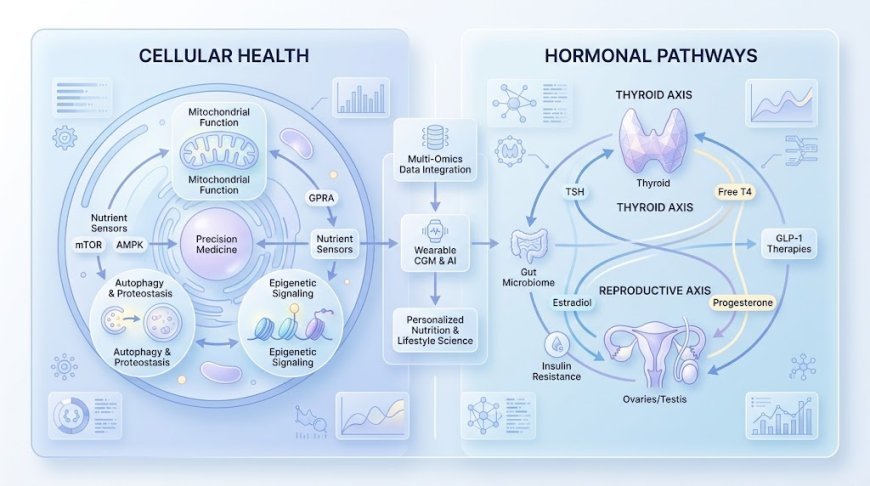
Reproductive medicine uses specific biomarkers and imaging tests to objectively assess ovarian reserve, which provides an idea of a woman's remaining eggs. ।
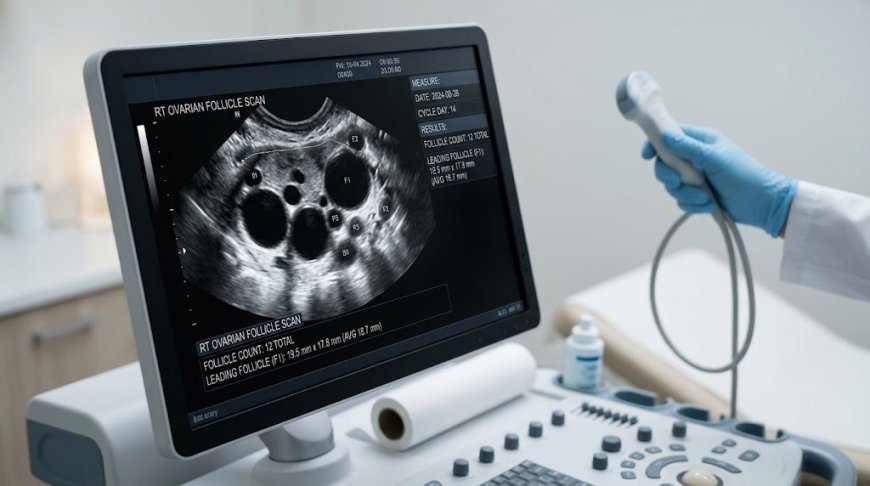
The most reliable biomarker is anti-Mullerian hormone (AMH). This protein hormone is secreted by the granulosa cells of the small antral follicles of the ovary. Since AMH levels do not vary much across the menstrual cycle, it can be assessed at any time with a blood test. This is accompanied by an antral follicular count (AFC) test via transvaginal ultrasound. The immediate fertility of the ovary is determined by counting the number of visible follicles measuring 2 to 10 millimeters in size in the ovary on the 2nd to 3rd day of the menstrual cycle. ।
Serum follicle stimulating hormone (FSH), luteinizing hormone (LH), and estrogen (Estradiol/E) are tested on the second or third day of menstruation to obtain additional diagnostic information. When the number of eggs in the ovaries decreases, the brain releases excess FSH to stimulate the ovaries. If the FSH level on day 3 exceeds 19 mIU/mL, it indicates premature ovarian insufficiency or severely low ovarian reserve. ।
|
Diagnostic tests |
Laboratory Values |
Clinical Interpretation |
|
AMH: High / Polycystic |
> 4.0 ng/mL |
High reserve; indicative of PCOS or excess follicles |
|
AMH: Normal range |
1.0 – 4.0 ng/mL |
Normal ovarian reserve and fertility |
|
AMH: Low levels |
0.5 – 0.99 ng/mL |
Diminished ovarian reserve (DOR) |
|
AMH: Very low |
< 0.5 ng/mL |
Alarmingly low reserves; urgent intervention needed |
|
Day- FSH: normal |
< 10 mIU/mL |
Normal ovarian response |
|
Day- FSH: High |
১ – ১ mIU/mL |
Decreased ability to respond |
|
Day- FSH: Alarming |
> 19 mIU/mL |
Premature ovarian failure or low response |
Low AMH and the real possibility of a normal pregnancy
Low AMH means a woman is completely infertile—this is a huge misconception in the light of medical science. According to fertility experts, AMH only reveals the number or statistics of eggs remaining in the ovaries, but it is not the only measure of egg quality. ।
If the age is young (for example, under 35 years), the genetic and cellular quality of the few eggs produced may be very good even if the AMH level is below 1.0 ng/mL. In this condition, if at least one healthy egg is released from the ovary every month and the uterus and fallopian tubes are normal, there is a 100% chance of natural conception. ।
However, when AMH decreases with increasing age (especially between 35 and 40 years or above), both the quantity and quality of eggs decrease simultaneously. This increases the risk of aneuploidy or chromosomal abnormalities, which can delay normal pregnancy or increase the risk of recurrent miscarriage or abortion. Therefore, it is wise to adopt a specific treatment plan rather than panic if low AMH is detected. ।
Reproductive medicine, assistive technology and modern clinical solutions

It is very important to consult a fertility specialist without wasting time after detecting diminished ovarian reserve. ।
In younger women, if the fallopian tubes are open and the partner's sperm count is normal, doctors recommend timed intercourse by determining the exact time of ovulation with the help of specific medications and folliculometry ultrasound. The next step is to use IUI (Intrauterine Insemination) therapy by placing ovulation-inducing drugs and processed sperm directly into the uterus. ।
If the number of eggs is extremely low or if you are over 35, in vitro fertilization (IVF) or test tube baby treatment is the most effective method. In this, eggs are collected from the ovaries through controlled ovarian stimulation, fertilized in the laboratory, and then the developed embryo is transferred to the uterus. According to doctors, even if IVF attempts fail, the chances of conceiving naturally are never completely exhausted; with consistent patience and proper treatment, the chances of success increase. ।
Medical supplementation has proven to be very helpful in increasing cellular quality and mitochondrial energy. :
-
DHEA (Dehydroepiandrosterone):Improves the ovarian androgenic environment, increasing early follicle growth and responsiveness to stimulation ।
-
L-Carnitine and Co-Enzyme Q 0:Transports fatty acids to the microscopic mitochondria of the follicle, increasing cellular energy production and improving the egg's energy source ।
-
Antioxidant and anti-inflammatory diet:Foods rich in vitamins C, E, folic acid, zinc, and omega-3 prevent oxidative damage to the ovaries. ।
-
Lifestyle and mental health changes:Avoiding the harmful effects of smoking and chemicals (BPA), maintaining daily weight control, and reducing stress have a positive impact on follicular health. ।
Future prospects and final conclusions for reproductive health

Thanks to modern advances in medical science and reproductive endocrinology, achieving motherhood even with low egg count is now scientifically well-established. A decrease in the number of eggs should not be considered an extreme manifestation of infertility, but rather a specific signal for timely treatment. With early diagnostic evaluation, specific treatment as directed by a fertility specialist, and maintaining a positive mental outlook, successful pregnancy is possible despite low ovarian reserve. ।
What's Your Reaction?
 Like
0
Like
0
 Dislike
0
Dislike
0
 Love
0
Love
0
 Funny
0
Funny
0
 Angry
0
Angry
0
 Sad
0
Sad
0
 Wow
0
Wow
0