























Elvis Presley: Why the King of Rock and Roll Still Lives in Music History
Nearly five decades after his death, Elvis Presley remains one of music’s most influential icons. Explore his rise to fame, musical legacy, iconic performances, Hollywood career, and the story behind his enduring status as the King of Rock and Roll.
Elvis Presley: Why the King of Rock and Roll Still Rules Music History
More than four decades after his death Elvis Presley remains one of the most recognizable names in music history.
He was a singer actor performer fashion icon and one of the earliest modern examples of a global pop superstar. His career helped reshape the sound of popular music but his influence went far beyond records. Elvis changed the way performers moved on stage dressed in public and connected with television audiences.
On August 16 1977 Elvis died at just 42 years old at his Graceland home in Memphis Tennessee. Yet his cultural influence never disappeared. Nearly 50 years later his music continues to be played his performances are studied and his image remains deeply embedded in popular culture.
So, what made Elvis Presley so important and why is he still called “The King”?
From a Small-Town Childhood to a Musical Revolution
Elvis Aaron Presley was born on January 8 1935 in Tupelo Mississippi. His childhood was shaped by the sounds of gospel country and blues influences that would eventually become central to his musical identity.
After moving to Memphis Elvis was exposed to an even wider range of American music. He absorbed elements from different musical communities and eventually developed a style that did not fit neatly into one genre.
That mixture became one of his greatest strengths.
In 1954 Elvis recorded “That’s All Right” at Sun Records. At the time he was largely unknown but the recording demonstrated something unusual: traditional American musical influences could be combined into something energetic and distinctly modern.
His career accelerated rapidly after his recording contract moved to RCA. In 1956 “Heartbreak Hotel” became a major breakthrough and established Elvis as a national star.
Elvis Did More Than Sing Rock and Roll
Calling Elvis simply the “King of Rock and Roll” does not fully explain his musical range.
Throughout his career he performed rock and roll country gospel ballads and romantic songs. Tracks such as “Hound Dog” “Jailhouse Rock” “Blue Suede Shoes” “Love Me Tender” “Suspicious Minds” and “Can’t Help Falling in Love” revealed very different sides of his artistic personality.
His ability to move between musical styles helped him reach audiences who might otherwise have remained separated by genre.
The Country Music Hall of Fame has also recognized the importance of country music throughout Elvis's career reinforcing the idea that his musical identity was broader than rock and roll alone.
His real contribution was not simply creating a new sound from nothing. He brought together existing musical traditions and presented them to a huge mainstream audience in a way that felt fresh and exciting.
His Greatest Impact May Have Been on Performance
Elvis did not treat singing as something that happened only through the voice.
His movements became part of the performance.
During the 1950s his hip movements facial expressions and physical energy created controversy as well as excitement. Some television audiences and authorities considered his stage behavior provocative. But the controversy only increased public curiosity.
That matters because modern pop performance is built around much more than sound. Today's major artists use choreography clothing lighting visual storytelling and stage presence as part of their identity.
Elvis was one of the performers who helped establish that model.
He showed audiences that a singer could become a complete visual performer not simply someone standing behind a microphone.
Elvis Turned Fashion into Part of the Show
Long before celebrity fashion became a major part of the entertainment industry Elvis understood that appearance mattered.
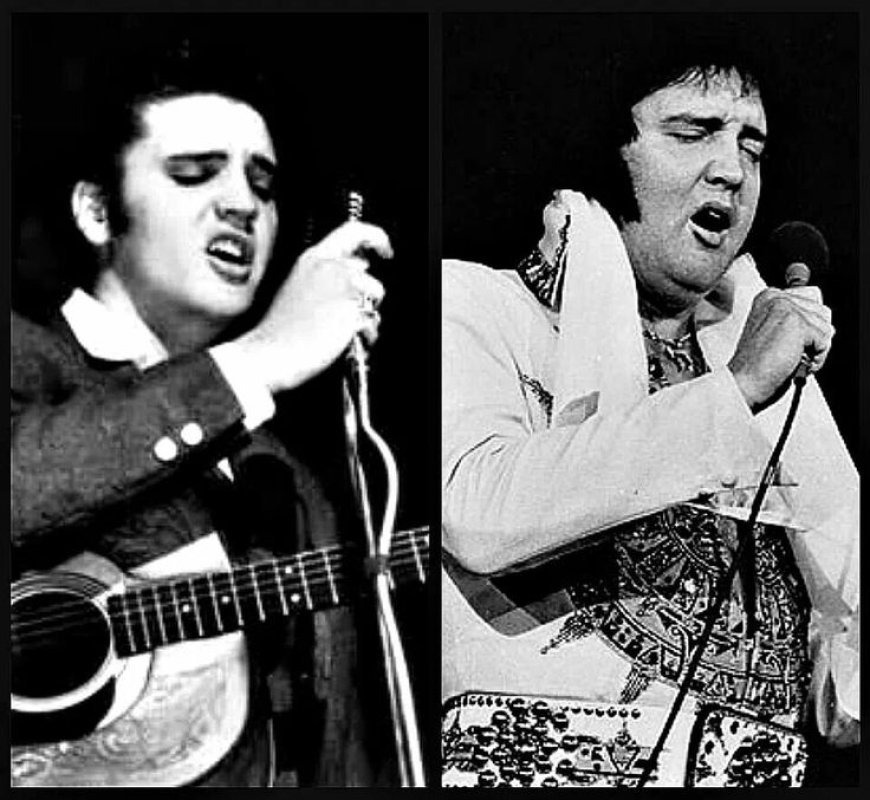
His early career featured colorful jackets distinctive hairstyles fitted clothing and sideburns that separated him from the conventional image of a young American man.
Later his stage wardrobe became even more dramatic.
The famous jumpsuits capes jewelry and oversized collars transformed Elvis from a conventional performer into a visual spectacle. The Rock & Roll Hall of Fame describes his evolution from an energetic young performer into a sophisticated showman reflecting how dramatically his public image developed over time.
For today's music industry where an artist's fashion can become as recognizable as their songs Elvis's approach feels remarkably familiar.

Television Helped Create the Modern Celebrity
Radio and record sales helped make Elvis’s famous but television changed the scale of his fame.
People could now see him perform in their own homes. His hairstyle facial expressions clothing and movements became part of his public identity.
That was a major shift in celebrity culture.
Elvis appeared in several important television specials including the 1968 special commonly associated with his comeback and the 1973 “Aloha from Hawaii via Satellite” performance. The latter was particularly significant because satellite technology allowed his performance to reach international audiences simultaneously.
In many ways Elvis helped demonstrate the commercial power of the television superstar.
Today celebrities build global audiences through YouTube TikTok Instagram and live streaming. In Elvis's era television played a similar role in turning a performer into a household name.
Hollywood Gave Elvis Another Career
Music was not Elvis's only ambition.
He also became a Hollywood actor and appeared in more than 30 feature films during his career. Graceland's official history records 31 feature films in which he acted along with two concert documentaries.
His movies were often commercially successful but his film career also represented a missed opportunity.
Many of his films followed familiar formulas involving romance comedy and musical performances. That made them accessible to audiences but it also limited the opportunity for Elvis to demonstrate the full range of his acting ability.
The irony is that the man who had taken considerable artistic risks in music was often placed inside relatively predictable Hollywood formulas.
The 1968 Comeback Changed Everything
By the middle of the 1960s Elvis's position in popular music had become more complicated.
New artists were transforming the music industry while Elvis was spending considerable time making movies. The Beatles Bob Dylan the Rolling Stones and other emerging artists were attracting younger audiences with radically different approaches to popular music.
Then came 1968.
The “68 Comeback Special” reminded audiences why Elvis had become famous in the first place. Wearing black leather and performing with a more direct intimate energy he appeared revitalized.
The comeback was more than a nostalgic return.
It demonstrated that Elvis could still command attention when he stepped away from the safer formulas that had surrounded parts of his career. The following year he entered another important chapter of his performing career with regular appearances in Las Vegas.
By then Elvis was no longer simply the young rebel of the 1950s. He had become a full-scale stage entertainer.
The Complicated Legacy Behind “The King”
Elvis's legacy is enormous but it is not simple.
One of the most important debates surrounding him concerns the relationship between his music and Black American musical traditions.
Blues rhythm and blues and gospel were fundamental to the musical environment from which Elvis developed. Black artists including Arthur “Big Boy” Crudup Big Mama Thornton and Sister Rosetta Tharpe had already made significant contributions to the musical language that later became central to rock and roll.
Elvis helped bring elements of those traditions to a much larger mainstream audience. But the racial inequalities of 1950s America meant that questions about recognition ownership and financial rewards could not be ignored.
That debate remains part of the historical discussion surrounding Elvis. Reducing the story to either “Elvis invented rock and roll” or “Elvis simply stole Black music” misses the complexity of the period.
His career existed within a deeply segregated American music industry and understanding that context is essential to understanding both his achievements and his controversies.
Fame Had a Dark Side
The public image of Elvis often focuses on the costumes music cars and sold-out performances.
The reality of his later life was much more difficult.
His health deteriorated during his final years while prescription drug dependence weight gain and the pressures associated with extraordinary fame became increasingly serious issues.
Elvis died at Graceland on August 16 1977 at the age of 42. His death transformed him from a living superstar into a cultural legend whose image would continue to grow long after his final performance.
His story therefore carries a second lesson: extraordinary fame does not automatically produce a healthy or satisfying life.
Why Elvis Presley Still Matters Today
The simplest answer is that Elvis changed more than music.
He helped redefine what a popular performer could be.
He combined music with movement. He made fashion part of musical identity. He understood the power of television. He moved between genres and audiences. He became an actor a recording artist and a large-scale stage performer.
Most importantly he helped establish the modern idea of the celebrity musician.
Today's global stars are expected to have a recognizable visual identity distinctive fashion powerful stage presence and a personal brand that exists beyond their music. Elvis was operating within that model decades before social media made it normal.
His music has survived changing formats changing generations and changing tastes. His performances continue to inspire tribute artists and entertainers around the world while Graceland remains closely connected to his legacy.
That is why the name Elvis still carries unusual weight.
He was not perfect. His career had contradictions controversies and missed opportunities. But cultural icons do not become important because they are flawless.
They become important because they change the conversation.
Elvis Presley did exactly that.
And almost five decades after his death “The King” remains one of the most influential figures ever produced by popular music.
What's Your Reaction?
 Like
0
Like
0
 Dislike
0
Dislike
0
 Love
0
Love
0
 Funny
0
Funny
0
 Angry
0
Angry
0
 Sad
0
Sad
0
 Wow
0
Wow
0